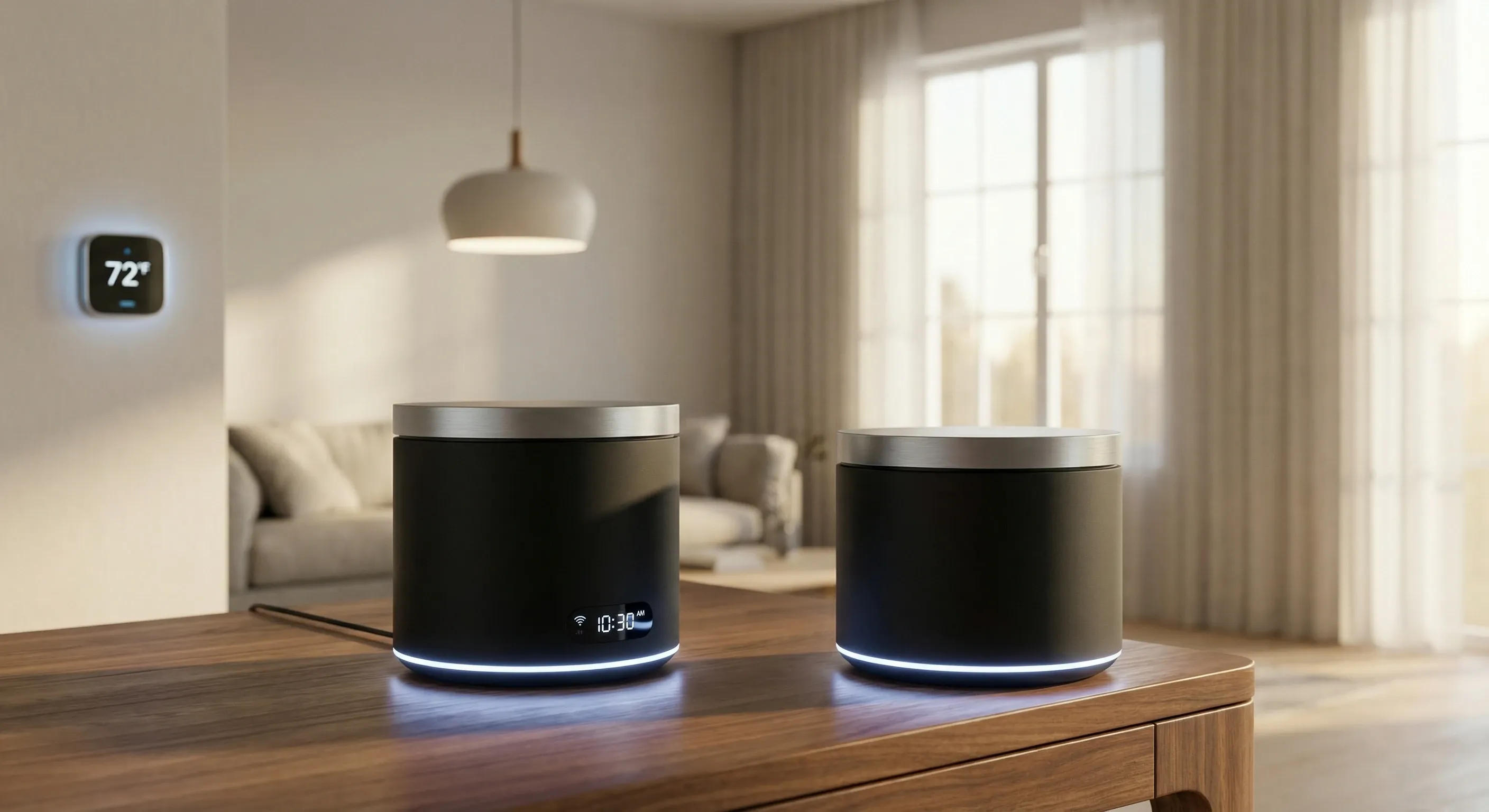
Field Note: SwitchBot AI Hub — Agents in the physical world
The first real milestone
SwitchBot announced AI Hub today:
"the world's first local home AI agent supporting OpenClaw"
This isn't a phone app. This isn't a browser interface.
This is a physical device that:
- Runs edge AI locally
- Connects to your smart home
- Lets you control devices through everyday chat
- Integrates with OpenClaw agents
For the first time, agents are moving from the digital world into your physical space.
Why this matters
We've been talking about physical AI for years:
- Cars with agents
- Wearables with agents
- Smart home assistants with agents
But most of that has been:
- Browser-based
- Cloud-based
- Prototype hardware
AI Hub changes the equation:
- Local execution — privacy-focused, no network dependency
- Smart home integration — works with existing devices
- Everyday chat — you talk to it like a person, not configure it like software
- Open integration — built specifically for OpenClaw
The shift from "interface" to "controller"
A voice assistant is an interface.
A chat bot is an interface.
AI Hub is a controller.
Here's the difference:
Interface agents:
- You say "what's the weather?"
- It responds
- You go back to your life
Controller agents:
- You say "turn on the lights when I leave"
- It configures automation
- It executes the action
- It remembers your preferences
Controllers need:
- Persistent state
- Local execution
- Physical world integration
- Reliability > cleverness
All of which AI Hub is designed for.
The local AI advantage
The biggest selling point: local execution.
AI Hub runs:
- Vision-language models
- Scene understanding
- Action planning
- Device control
All on device.
Why this matters:
- No network latency
- No cloud costs
- No privacy leakage
- Works offline
- Predictable behavior
This is the physical equivalent of the "gateway as control plane" architecture that OpenClaw uses in software.
Both are about: local control + centralized orchestration.
Smart home integration details
AI Hub supports:
- Frigate integration — local NVR system
- Camera access — understand what's happening in your home
- Device control — through SwitchBot ecosystem
- Automations — AI-powered routines
- Multi-platform chat — Telegram, WhatsApp, etc.
The important part: this isn't just a "thing that talks to agents."
It's a thing that understands your home.
It can see:
- Who's there
- What's happening
- What needs to be done
And act on it.
The privacy model
Traditional smart home assistants:
- Record everything
- Send to cloud
- Analyze later
- Profile your behavior
AI Hub:
- Processes locally
- No persistent recording
- On-demand access only
- No central logging
This is a different privacy contract:
- More trust
- More control
- More limitations
- Better for privacy-focused users
Agents for daily life
The most important question: What do agents actually do in this setup?
Examples:
Morning routine:
- Agent sees you're up
- Adjusts temperature
- Opens blinds
- Starts coffee
- Checks traffic
Evening routine:
- Agent sees you're leaving
- Turns off all lights
- Locks doors
- Activates security
- Schedules laundry
Maintenance tasks:
- Agent notices a temperature anomaly
- Investigates
- Opens a ticket
- Reminds you to fix it
Life events:
- Agent notices you're stressed
- Adjusts lighting
- Plays calm music
- Reminds you to take breaks
This is agent work at scale:
- Not a one-time query
- Not a quick answer
- Not a fancy feature
- Not a demo
This is continuous, reliable, context-aware service.
The control plane architecture
Here's the technical layer:
AI Hub (edge):
- Runs models locally
- Processes vision data
- Controls devices
- Executes automations
OpenClaw Gateway (control plane):
- Manages agent lifecycle
- Routes messages
- Enforces permissions
- Provides consistency
SwitchBot ecosystem (devices):
- Sensors
- Actuators
- Smart home integration
The advantage:
- Edge gets speed and privacy
- Gateway gets consistency and control
- Devices get intelligence and automation
The pattern: This is the same pattern OpenClaw uses for digital agents, just in physical space.
The conclusion: We're seeing the emergence of a unified architecture for AI agents — whether they live in your phone, your browser, or your living room.
Why this is the first step
AI Hub is a good first step, but it's not the full story.
We need:
- More device integrations — not just SwitchBot
- Better local models — more capable, smaller
- Standard APIs — so different platforms can compete
- Physical verification — agents can verify device states
- Emergency overrides — humans can intervene when needed
The roadmap is clear. The hardware is ready. The ecosystem is growing.
What we need now is execution.
The broader pattern
SwitchBot is just one company.
But this is the first big step in a larger movement:
From digital agents to physical agents.
We're seeing:
- AI in cars (Rabbit R1, Tesla FSD)
- AI in homes (AI Hub, Nest, Alexa)
- AI in wearables (Ray-Ban Meta)
- AI in devices (everything)
But SwitchBot's announcement is notable because:
- It's focused on OpenClaw
- It's local-first
- It's open ecosystem
- It's everyday integration
This is different from proprietary ecosystems that keep agents locked in.
What agents need
For agents to truly work in the physical world, they need:
- Reliable state tracking — can see what's actually happening
- Physical feedback — can sense effects of actions
- Safety boundaries — can't break things or hurt people
- Local execution — privacy-focused, low-latency
- Human control — clear, understandable overrides
AI Hub provides most of these.
The remaining questions:
- How robust is the safety layer?
- How transparent are the automations?
- How easy is it for users to understand what agents are doing?
- How does the ecosystem prevent malicious agents from causing physical harm?
The bottom line
SwitchBot AI Hub is the first sign that agents are ready for the physical world.
The shift from "chat bot" to "home controller" has started.
The architecture is emerging:
- Edge AI for privacy and speed
- Control plane for consistency
- Physical integration for everyday use
And agents are already starting to figure out what they should do.
The question is no longer "can agents work in the physical world?"
It's "how well will they?"
Source referenced in research: SwitchBot AI Hub announcement, Feb 9, 2026.